Your No-Show Rate Is Eating Profits — AI Reminders That Actually Work

A consultant books a client for a Tuesday afternoon. The slot is worth $400. Tuesday morning, the client cancels — or worse, just doesn't show up. The consultant sits there for an hour with an empty calendar and $400 that was supposed to cover payroll.
That's one no-show. It happens five times a month in this office. That's $2,000 gone — not from bad service or weak marketing, but from people simply not showing up.
If you run a dental practice, a salon, a law office, or any appointment-based business, you already know this number. You've watched the gaps in your schedule and felt the math in your bank account.
the reminder that doesn't work
Most businesses send one reminder. A text message or email 24 hours before the appointment. That's it.
It's easy to miss. The client is at work, in traffic, picking up kids. They see the message, think "I'll confirm later," and then forget entirely. Or they intended to come but something came up and they never got around to calling you.
One touch isn't enough. People need multiple points of contact to actually change their behavior — and your front desk doesn't have time to chase every appointment. The receptionist is already handling check-ins, answering phones, and dealing with the patients who did show up.
So the no-shows keep happening, and you keep absorbing the cost.
what an AI reminder sequence does differently
Instead of hoping a single message does the job, an AI reminder system sends a sequence of touchpoints that actually get results. Here's what it looks like in practice.
Confirmation at booking. The moment someone books an appointment, they get a confirmation that locks the time in their mind and their calendar. No more "wait, was that Tuesday or Thursday?"
Reminder one week out. A quick, friendly check-in that gives them plenty of time to reschedule if they need to. This is where you catch schedule conflicts early — while you still have time to fill the slot.
Reminder 24 hours before. The standard touchpoint, but now it's part of a sequence instead of the only message. It reinforces the appointment and gives them a direct way to confirm or reschedule.
Reminder two hours before. The final nudge. This is where you catch the people who genuinely forgot or got caught up in their day. It's also where most last-minute reschedules happen — and that's fine, because you get advance notice instead of an empty chair.
Each touchpoint goes out on the channel the client prefers — SMS, email, or voice call. If someone responds with "need to reschedule," the system handles that too, offering available times and updating your calendar. Zero involvement from you or your staff.
the roi is not theoretical
Let's say you average five no-shows per month and your typical appointment is worth $250. That's $1,250 per month in revenue you're losing — $15,000 a year — from appointments that were already booked and confirmed.
AI reminder sequences typically reduce no-shows by 30 to 50 percent. Recovering even half of those missed appointments means reclaiming $625 to $1,250 every month, or $7,500 to $15,000 annually.
Compare that to the cost of setting up the system. The math doesn't require a spreadsheet. You're currently paying for no-shows in lost revenue and wasted staff time. A reminder system that works costs a fraction of what you're losing.
map the problem, build the system, reclaim the revenue
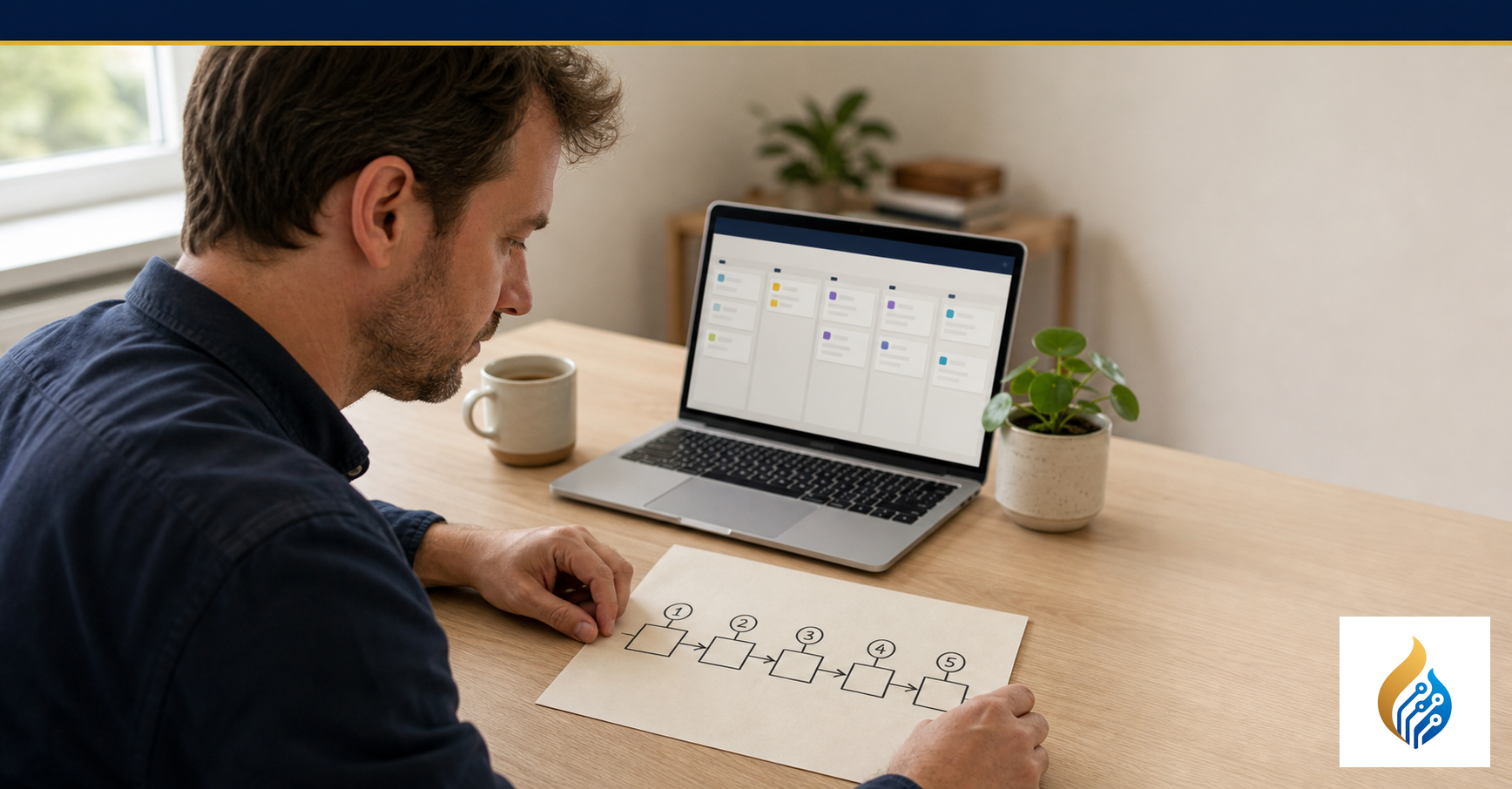
Here's the straightforward way to think about this. First, map how your current reminder process fails — count your monthly no-shows, calculate the revenue per missed appointment, and add up the staff hours spent chasing confirmations. That number is what's at stake.
Then build the sequence — a multi-touch, multi-channel reminder flow that contacts every client at the right intervals through the right channel, with automatic rescheduling built in.
Finally, reclaim the revenue that was already yours. Those appointment slots were always supposed to generate income. The no-shows were never a "cost of doing business" — they were a system gap that now has a fix.
you don't set this up yourself
Aurumflare configures the full reminder sequence for your business — the timing, the channels, the rescheduling logic, the calendar integration. You don't piece together tools or figure out workflows. We map your current gaps, build the system, and hand it to you running.
Book a free technical assessment at aurumflare.com/contact to see how much you could recover.
See how AI automation could work for your business
Book a free 30-minute assessment — no pitch, just answers.
Book a Free Assessment